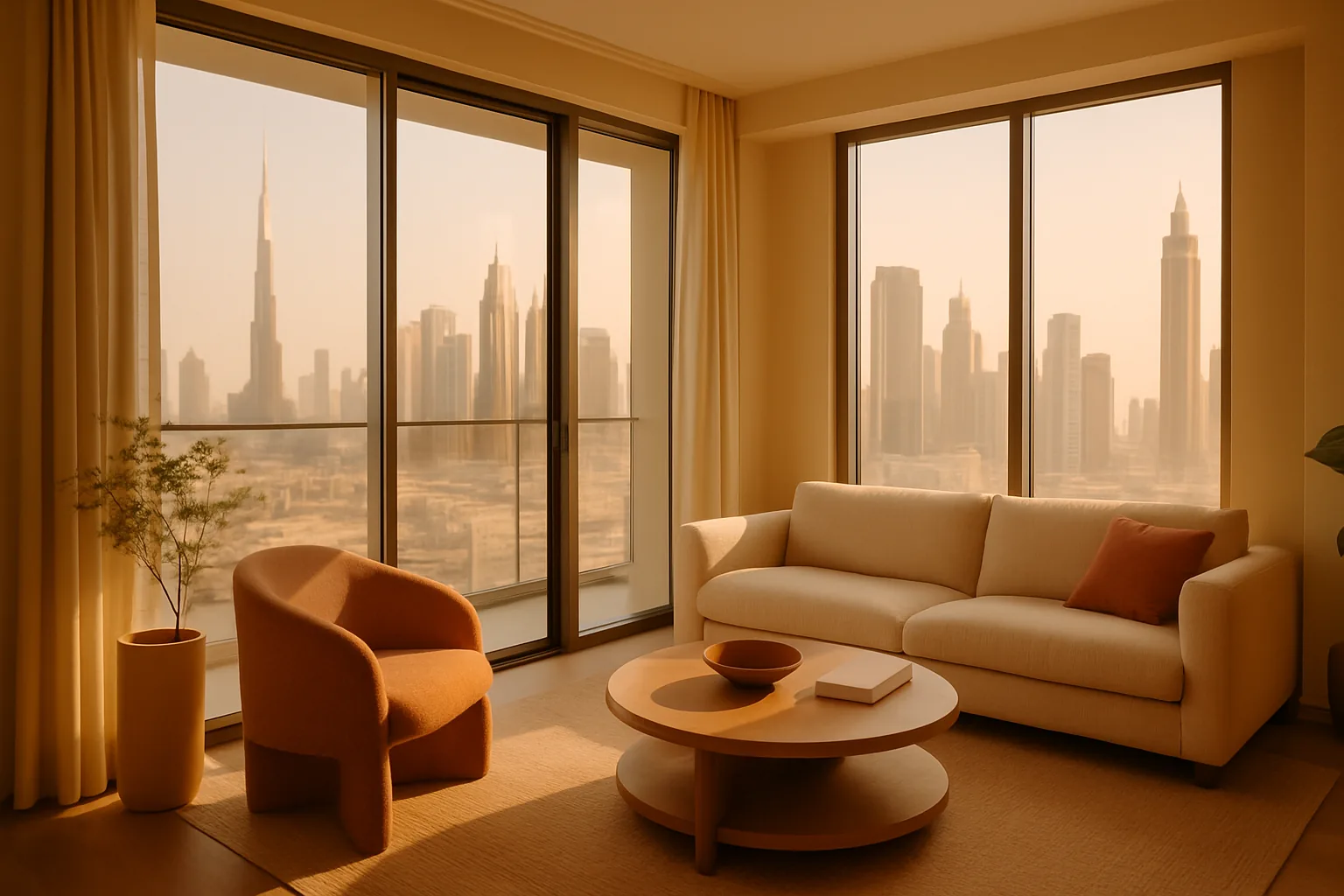
Why buy property in Dubai
Dubai's appeal to international property buyers is straightforward: zero property tax, zero capital gains tax, zero income tax. The UAE Ministry of Finance maintains this tax-free environment for both residents and non-residents, which means rental yields typically range from 5-8% net, with no tax authority taking a cut.
Beyond the fiscal benefits, property purchases above AED 2 million qualify for the Golden Visa, offering 10-year renewable residency with minimal physical presence requirements. This residency pathway doesn't require setting up a company or maintaining employment, making it one of the cleanest investor visa programs globally.
The market itself offers something rare: a developed city with mature infrastructure that still allows 100% foreign ownership in freehold zones. You're not buying into an emerging market with questionable legal frameworks. The Dubai Land Department maintains a transparent registry system, and RERA enforces developer accountability through the Escrow Law and Oqood registration for off-plan projects.
Freehold vs leasehold: where foreigners can buy
Freehold means you own the property and land outright, forever. Foreigners can buy freehold only in designated areas, which conveniently covers most of what people actually want: Downtown Dubai, Dubai Marina, JBR, Business Bay, Palm Jumeirah, Dubai Hills Estate, MBR City, Arabian Ranches, JVC, JVT, and the entirety of new developments from Emaar, DAMAC, Sobha, and other major developers.
Leasehold properties typically come with 99-year terms and are found in older Dubai areas like Deira and Bur Dubai. Unless you have specific reasons to look at these areas, most international buyers focus exclusively on freehold zones where you get full ownership rights and can pass the property to heirs without complications.
The practical distinction matters for financing too. UAE banks readily offer mortgages on freehold properties in established zones. Leasehold properties face more scrutiny and often lower LTV ratios.
Off-plan vs ready property
Off-plan properties in Dubai are typically priced 20-30% below equivalent ready properties. You're buying during construction, paying in installments tied to completion milestones, and banking on appreciation by handover. Dubai's Escrow Law (Law No. 8 of 2007) mandates that all buyer payments go into escrow accounts, released to developers only as they hit registered construction stages.
The typical off-plan payment structure runs 10-20% down payment, 50-70% during construction spread over 2-4 years, and 10-30% on handover. Some developers like Emaar and DAMAC also offer post-handover payment plans, letting you move in and pay the final 20-40% over 3-5 years at 0% interest.
Lower entry price
20-30% discount to ready market. Flexible payment plans from developers. No service charges until handover. Risk: delivery delays, market downturn before completion, final unit may differ from show unit.
Immediate possession
Move in immediately or rent out from day one. See actual unit before buying. Faster mortgage approval. Higher initial cost but no construction risk. Service charges start immediately.
Ready properties make sense if you need immediate rental income or want certainty about what you're buying. You can walk through the actual unit, assess build quality, and often negotiate harder on price since sellers are more motivated than developers.
Off-plan works when you have a 2-4 year horizon, want to minimize upfront capital, and believe the area will appreciate. Areas like Dubai Creek Harbour, MBR City, and Tilal Al Ghaf are still heavily off-plan with limited ready stock.
The real cost breakdown
The 4% DLD transfer fee is non-negotiable, paid at registration. On a AED 2 million apartment, that's AED 80,000. Add another AED 4,000-5,000 for trustee office fees, title deed issuance, and mortgage registration if financing.
| Cost Item | Amount (AED) | Who Pays |
|---|---|---|
| DLD Transfer Fee (4%) | 80,000 | Buyer |
| Buyer Broker Fee (2%) | 40,000 | Buyer |
| Trustee/NOC Fees | 4,000 | Buyer |
| Mortgage Registration (if applicable) | 4,000-8,000 | Buyer |
| Valuation Fee | 2,500-3,500 | Buyer |
| Total Transaction Costs | ~130,500-135,500 |
Broker fees in Dubai are typically 2% paid by the buyer, though this is technically negotiable. On off-plan purchases directly from developers, you often avoid buyer broker fees if you go through the developer's sales office, though you lose independent representation.
For off-plan properties, you're also looking at a 10% down payment structure in most cases, though this varies. A AED 2M off-plan unit might require AED 200,000 down, then AED 100,000-150,000 every 6-12 months during construction.
Annual service charges range from AED 10-30 per square foot depending on building amenities and developer. A 1,000 sqft apartment in Business Bay might run AED 12,000-18,000 annually for maintenance, security, pool, and gym access. Luxury developments with extensive amenities (Palm Jumeirah, Downtown Dubai) skew higher.
Financing and payment plans
UAE banks offer mortgages to non-residents, but expect stricter terms than residents receive. Non-residents typically get 50-60% LTV on ready properties, meaning you need 40-50% down payment plus transaction costs. Residents can access 75-80% LTV on properties below AED 5M.
For off-plan properties, even UAE residents face reduced LTV ratios, usually capped at 50%. Banks view off-plan as higher risk since the collateral doesn't exist yet. This is where developer payment plans become critical.
Many developers offer payment plans that effectively function as financing: 60/40 plans (60% during construction, 40% on handover), 40/60 plans, or 1% monthly installments. Some like DAMAC and Azizi offer post-handover plans where you pay 20-40% over 3-5 years after moving in, at zero interest.
If you're financing through a UAE bank, expect mortgage rates of 4.5-6.5% depending on the bank, your credit profile, and whether you're resident or non-resident. Mortgage terms run up to 25 years, though banks prefer 15-20 year terms for non-residents.
The mortgage process requires salary certificates (or business income proof for self-employed), bank statements for 6 months, passport copy, visa copy for residents, and a property valuation. Banks typically take 2-3 weeks for approval once documentation is complete.
The buying process step-by-step
Start by determining your budget including transaction costs, not just the property price. If you have AED 1.5M available, you're looking at properties around AED 1.3M after accounting for DLD fees and other costs.
Search on Property Finder or Bayut to understand pricing in your target areas. Use floorplanplease.ae to compare actual unit layouts across buildings, since square footage alone doesn't tell you whether a unit is well-designed. A cramped 1BR is still cramped, even if it technically hits 750 sqft.
Once you identify target properties, engage a broker or visit developer sales offices for off-plan. For ready properties, arrange viewings through the listing broker. Expect to see 5-10 units before finding one that works.
When you're ready to make an offer, you'll sign an MOU (Memorandum of Understanding) or Form F with the seller, typically with a 10% deposit that's held in the broker's escrow account. This locks the price and gives you 5-10 days to arrange financing and complete due diligence.
Due diligence means checking DLD records for any liens, verifying service charge payment history, reviewing building management contracts, and confirming the developer has issued an Oqood certificate if it's an off-plan project. Your broker or conveyancing lawyer handles most of this.
Once financing is confirmed (or you have cash ready), you'll schedule a DLD registration appointment. Both buyer and seller (or their authorized representatives) attend, sign the transfer paperwork, pay the 4% fee, and the title deed is issued in your name immediately. The process takes about an hour.
For off-plan purchases, you sign a Sale and Purchase Agreement (SPA) with the developer, register it with DLD (paying 4% on the total value upfront, not per installment), and make payments according to the construction schedule. You receive the title deed only upon project completion and final handover.
What to watch out for
Verify the developer's track record before buying off-plan. Emaar, Meraas, Nakheel, and Sobha have consistent delivery records. Smaller developers sometimes delay or alter final specifications.
For ready properties, check the age and reputation of the building. Some older towers in JLT and Business Bay have maintenance issues or difficult building management. Online owner forums and your broker can flag problem buildings.
Understand service charges before buying. Buildings with extensive amenities look attractive until you're paying AED 30,000 annually for facilities you don't use. Review the service charge invoice and management contract.
If buying for rental yield, verify realistic rental rates in the building through actual listings, not developer projections. A 7% gross yield becomes 5% net after service charges, maintenance, and vacancy periods.
Frequently asked questions
Can foreigners buy property anywhere in Dubai?
Foreigners can buy freehold property only in designated areas, which includes most of new Dubai: Downtown, Marina, JBR, Business Bay, Palm Jumeirah, Dubai Hills, MBR City, and all major new developments. These zones cover what most international buyers want anyway.
What's the minimum property price for Golden Visa eligibility?
Properties valued at AED 2 million or above qualify for the UAE Golden Visa, offering 10-year renewable residency. The property must be purchased through mortgage or cash, and you cannot sell it while maintaining visa status through that property investment.
How much deposit do I need for off-plan property in Dubai?
Typical off-plan payment plans require 10-20% down payment, then 50-70% in installments during construction over 2-4 years, with the remaining 10-30% due on handover. Some developers offer post-handover plans extending the final payment over 3-5 years.
Can non-residents get mortgages in Dubai?
Yes, UAE banks offer mortgages to non-residents with 50-60% LTV on ready properties, meaning you need 40-50% down payment. Interest rates run 4.5-6.5% with terms up to 25 years, though banks prefer 15-20 years for non-residents.
What are the ongoing costs of owning property in Dubai?
Annual service charges range from AED 10-30 per square foot depending on amenities. There's no property tax, no income tax on rental income, and no capital gains tax on sale. Budget 1-2% of property value annually for maintenance reserves and potential special assessments.