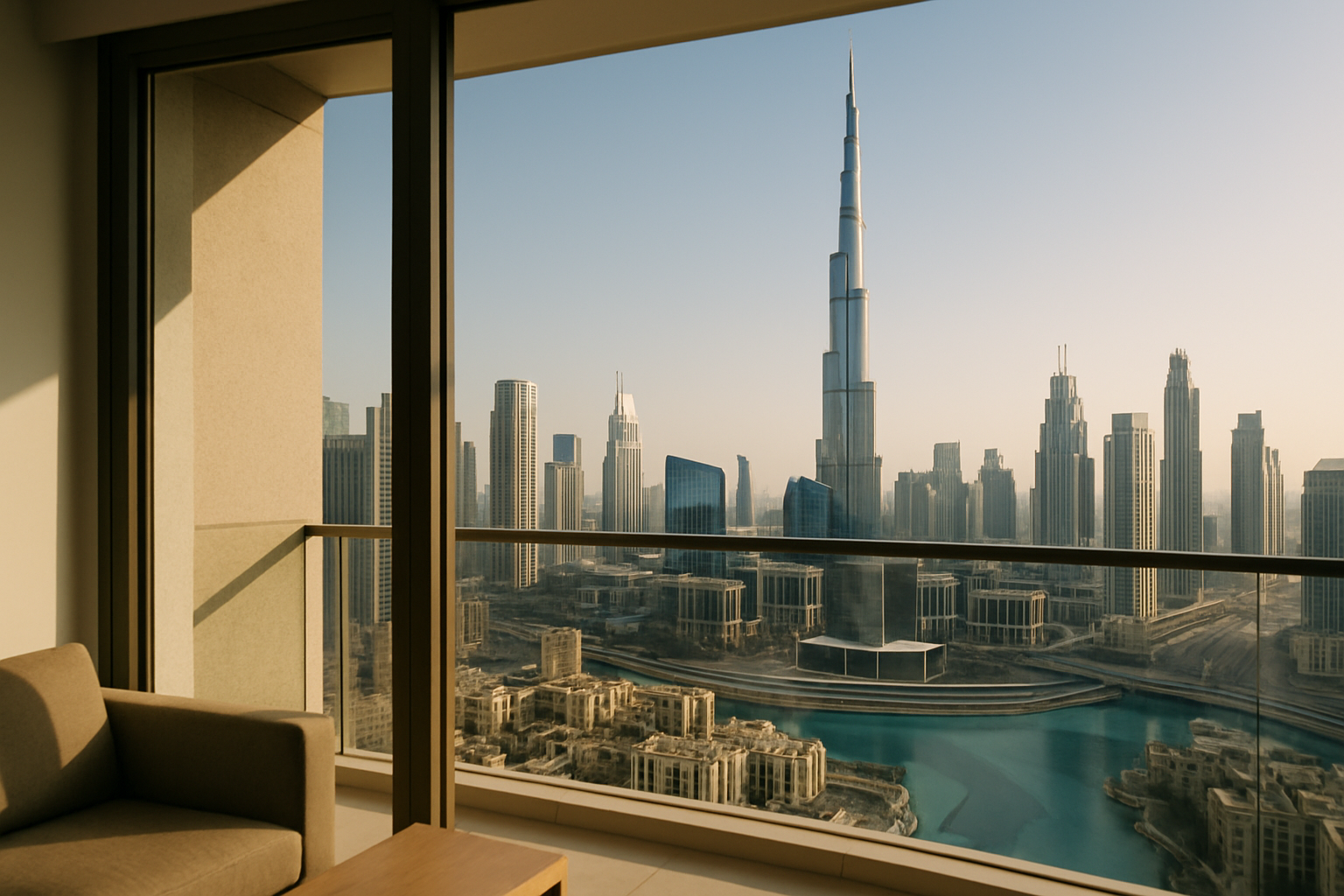
Capital growth in Dubai follows patterns that don't always align with marketing hype. The areas delivering actual appreciation share specific characteristics: major infrastructure completion, developer track record, community maturity timing, and genuine end-user demand rather than pure investor speculation.
Unlike markets with property taxes and complex ownership structures, Dubai's freehold system and zero capital gains tax mean your growth isn't eroded by holding costs. The Dubai Land Department transaction data shows which areas are moving from investor churn to owner-occupier stability—the inflection point where sustained growth typically begins.
This isn't about finding the "next big thing." It's about identifying areas where infrastructure spend, delivery timelines, and demand fundamentals converge in the next 24-36 months.
What drives capital growth in Dubai property
Capital appreciation in Dubai follows three primary drivers: infrastructure catalysts, community completion rates, and rental yield compression.
Infrastructure catalysts are the most reliable. When the metro extension reaches Dubai South or the Etihad Rail freight terminal becomes operational, property values within 2km respond within 6-12 months. The Blue Line metro extension to Dubai Creek Harbour is the clearest current example—announced completion phases correlate directly with off-plan price increases in adjacent towers.
Community completion rates matter because partially built areas trade at discounts. When a masterplan reaches 60-70% physical completion, the discount narrows rapidly. Buyers pay premiums for finished communities with schools, retail, and parks actually open. MBR City villa districts showed this pattern clearly in 2023-2024 as community infrastructure came online.
Rental yield compression drives appreciation in mature areas. When an area's rental yield drops from 7% to 5% while rents stay flat, capital values have risen 40%. This happened in Business Bay from 2021-2024 as yields compressed from investor-heavy to mixed-use occupancy.
Transaction velocity matters too. RERA regulated areas with high turnover demonstrate price discovery—you can actually sell at market peaks. Low-liquidity areas might show paper gains you can't realize.
Dubai South and Expo district: infrastructure play
Dubai South represents the clearest infrastructure-driven growth thesis in the emirate. Al Maktoum International Airport expansion, Etihad Rail connectivity, and Expo 2020's permanent district create a multi-year appreciation catalyst.
Current pricing sits 40-50% below comparable areas in new Dubai. Studios in Emaar South start around AED 550k, 1-beds from AED 850k, with payment plans extending 3-5 years post-handover. The discount reflects infrastructure incompletion and commute distance—both temporary conditions.
The airport expansion timeline is critical. When freight operations scale and passenger terminals open (phased through 2027-2030), employment density increases exponentially. Aviation, logistics, and hospitality workers need housing within 15-minute commutes. Current supply doesn't match projected demand.
| Area | Current avg price | Price per sqft | Completion growth (3yr estimate) |
|---|---|---|---|
| Dubai South (Emaar South) | AED 1.4M | AED 1,100 | 30-40% |
| Town Square | AED 1.8M | AED 1,350 | 15-25% |
| Dubailand (Remraam) | AED 1.5M | AED 1,150 | 10-20% |
| JVC established areas | AED 1.7M | AED 1,250 | 8-15% |
Emaar, Nakheel, and MAG are active developers here. Emaar South and The Valley (adjacent) benefit from Emaar's delivery record—relevant because off-plan appreciation depends on on-time handover. Delayed projects miss appreciation windows.
Risk factors: infrastructure delays extend the appreciation timeline, and oversupply is possible if multiple developers flood inventory before demand arrives. The bet is on infrastructure delivery matching or preceding residential supply.
Dubai Creek Harbour: the long masterplan bet
Dubai Creek Harbour is Emaar's 6 square kilometer masterplan directly across from Downtown Dubai. The Dubai Creek Tower (on hold but planned to exceed Burj Khalifa height) anchors the district alongside canal-front living and metro connectivity.
Current completion sits around 40%, with multiple tower clusters in construction. Early buyers from 2016-2018 have seen 35-50% appreciation as completed buildings establish market pricing. The pattern repeats: off-plan sells at discount, handover phase sees 20-30% jump, community maturity adds another 15-25%.
Pricing today: 1-beds from AED 1.3M to AED 2.1M depending on tower and view, 2-beds AED 1.9M to AED 4M. The range reflects completion status—finished buildings command premiums over off-plan in the same district.
The metro extension is the catalyst. Blue Line connectivity to Business Bay and beyond changes commute dynamics entirely. Current car-dependency limits buyer pool; metro access expands it to families and professionals without vehicles.
Off-plan in uncompleted zones
Higher discount (25-30% below ready), developer payment plans, 2-3 year wait, infrastructure uncertainty, liquidity risk before handover
Nearly complete towers (6-12 months out)
Moderate discount (15-20%), infrastructure visible, community amenities opening, handover appreciation catalyst imminent, can inspect actual unit
Ready properties in finished clusters
No discount, immediate occupancy, proven rental yields, established market comps, lower appreciation upside (10-15% vs 25-35%)
The risk is masterplan fatigue. Large developments take 10-15 years to complete. Buyer enthusiasm wanes if infrastructure delays persist. Creek Harbour benefits from Emaar's track record—Downtown Dubai and Dubai Hills both delivered on extended timelines—but timeline extensions compress annual returns.
Best approach: target buildings 12-18 months from handover where infrastructure (retail, metro, parks) is visibly progressing. You capture most of the discount without maximum timeline risk.
Business Bay: yield plus growth hybrid
Business Bay offers something rare in Dubai: 6-7% rental yields plus ongoing capital appreciation. Most areas give you one or the other. The canal-side district combines commercial density with residential stock, creating dual demand.
Pricing has risen 40-50% since 2020, yet yields remain attractive because rents increased alongside capital values. Studios rent for AED 45k-65k annually (selling for AED 750k-1.1M), 1-beds AED 70k-95k (selling AED 1.2M-2M), 2-beds AED 110k-160k (selling AED 2M-3.5M).
The growth driver is occupier mix. Business Bay shifted from 80% investor-owned (2019) to roughly 60/40 investor-occupier split (2024). Owner-occupiers pay premiums for specific buildings, views, and finishes. Investors chase yield. The overlap creates price support.
DAMAC, Omniyat, and Emaar towers dominate, with quality variance significant. Burj Royale, Executive Tower B, and Paramount Hotel Residences hold value better than older, poorly managed buildings. Strata quality matters in high-density areas—check service charge history and sinking fund status.
Metro access (Red Line) is already operational, unlike emerging areas. The Business Bay station connects to airport, Downtown, and Marina in under 20 minutes. This infrastructure maturity means growth comes from district evolution, not new catalysts.
Risk is oversupply—new launches continue despite existing inventory. Track vacant units via listing platforms; sustained 15%+ vacancy would pressure both yields and values. Current vacancy sits around 8-10%, manageable but worth monitoring.
MBR City villa communities: family demand driver
Mohammed Bin Rashid City villa communities—particularly Meydan, Dubai Hills Estate, and Tilal Al Ghaf—capture expat family demand that apartments can't satisfy. Villas with gardens, community pools, and school proximity command premiums as families exhaust Arabian Ranches and Springs inventory.
Pricing: 3-bed townhouses start AED 2.5M in Tilal Al Ghaf, AED 3.2M in Dubai Hills Acacia/Maple, reaching AED 5M+ for larger plots. Standalone villas begin around AED 4M and extend past AED 15M for golf course plots in Dubai Hills.
Capital growth here follows school and retail delivery. When Repton, GEMS, or Kings' schools open campus in a community, villa prices increase 10-15% within 12 months. Families pay substantial premiums to live within school catchment zones—international school fees run AED 40k-90k annually, and commute time matters with multiple children.
Emaar (Dubai Hills Estate), Meydan (MBR City districts), and Nshama (Town Square, Tilal Al Ghaf) are primary developers. Emaar maintains highest resale values; Nshama offers better entry pricing with acceptable appreciation.
Payment plans are aggressive—60/40 and post-handover plans common. A AED 3M townhouse might require AED 300k down, AED 1.5M through construction, and AED 1.2M over 2-3 years post-handover. This leverage amplifies returns if values appreciate, but creates pressure if they don't.
| Community | Price range | Service charge | School access | Completion status |
|---|---|---|---|---|
| Dubai Hills Estate | AED 3.2M-4.5M | AED 18-22/sqft | GEMS, Repton on-site | 70% complete |
| Tilal Al Ghaf | AED 2.5M-3.8M | AED 15-19/sqft | GEMS nearby | 50% complete |
| Town Square | AED 2.2M-3.2M | AED 14-18/sqft | Planned, not open | 60% complete |
| Arabian Ranches 3 | AED 2.8M-4.2M | AED 16-20/sqft | Ranches Primary nearby | 40% complete |
Liquidity is slower than apartments—villa sales take 60-90 days vs 30-45 for apartments. Buyer pool is narrower (families with AED 2M+ budgets), so market timing matters more. Selling during summer (low season) or school year mid-term extends timelines.
The appreciation thesis: expat population growth (Dubai targets 5.8M residents by 2030 vs 3.6M in 2024) concentrates in family demographics. Villa supply hasn't kept pace with apartment supply, and greenfield land is increasingly distant from employment hubs. Established villa communities within 25 minutes of Business Bay/DIFC will tighten.
Downtown Dubai and DIFC: established premium
Downtown Dubai and DIFC represent mature appreciation—you're buying established luxury, not betting on future infrastructure. Growth is steady (8-15% annually) rather than explosive, but liquidity is highest and exit risk lowest.
Downtown pricing: 1-beds AED 1.8M-3.5M, 2-beds AED 3M-7M, 3-beds AED 5M-15M+ depending on building and Burj Khalifa view. Emaar towers dominate (Burj Khalifa, Address Boulevard, Boulevard Point), with resale values holding better than competitor buildings.
DIFC pricing mirrors Downtown with premium for Gate Avenue and ICD Brookfield Place buildings. These serve owner-occupier finance professionals who prioritize walk-to-work proximity. Yields are lower (4-5%) but tenant quality is higher and vacancy minimal.
The growth driver is supply constraint. Downtown is built out—minimal new launches possible. Demand from global HNW buyers continues (Russian, European, Chinese capital inflows), while supply is fixed. Basic economics suggests sustained appreciation, albeit slower than emerging areas.
Transaction data from the Dubai Land Department shows Downtown maintains highest price per square foot citywide, with premium units (Burj views, high floors) appreciating faster than mid-tier stock in same buildings. A floor-level difference of 20 floors can mean 30-40% price variance.
Best opportunities are distressed sellers or off-market transactions. On-market Downtown listings are efficiently priced—brokers know the comps. Off-market deals (estate sales, urgent relocations, developer bulk releases) offer 10-15% discounts if you have ready funds and can close quickly.
Risk is minimal compared to emerging areas, but upside is capped. You won't see 40% appreciation in three years, but you also won't see project delays or infrastructure failures. This is wealth preservation with moderate growth, not aggressive speculation.
Frequently asked questions
Frequently asked questions
What areas in Dubai have the highest capital growth potential in 2026?
Dubai South and Expo district offer 30-40% growth potential over 3 years due to airport and rail infrastructure. Dubai Creek Harbour provides 25-35% potential as metro and community completion progress. Business Bay offers balanced 20-25% growth with 6-7% yields, while MBR City villa communities target 20-30% growth driven by expat family demand and school delivery.
Is it better to buy off-plan or ready property for capital growth?
Off-plan in areas 12-18 months from completion typically offers the best growth balance—you capture 15-25% discounts versus ready stock and benefit from handover-phase appreciation of 20-30%, while avoiding maximum timeline risk of early-phase launches. Ready property in emerging areas sacrifices the discount but provides immediate rental income and eliminates delivery risk.
How much capital growth can I expect from Dubai property?
Emerging areas with infrastructure catalysts (Dubai South, Creek Harbour) historically deliver 25-45% appreciation from off-plan purchase through 2-3 years post-completion. Established areas (Downtown, Marina) provide steadier 8-15% annual growth. Villa communities with school delivery see 20-30% growth over 3-4 years as family demand concentrates.
What kills capital growth in Dubai property?
Infrastructure delays, developer delivery failures, and area oversupply suppress growth. Buildings with poor strata management lose 15-25% value versus well-managed comparables. Low-liquidity areas with under 10 monthly transactions make paper gains difficult to realize. Communities that stay under 50% occupied for extended periods rarely appreciate until occupancy improves.
Should I buy in multiple areas or concentrate for capital growth?
Concentration in 1-2 high-conviction areas allows better market timing on exits and builds area expertise for identifying best buildings and value opportunities. Diversification across 3+ areas reduces infrastructure risk and developer-specific delays. Most investors with AED 3M+ budgets split between one emerging area (higher growth) and one established area (liquidity and yield) to balance risk-return.