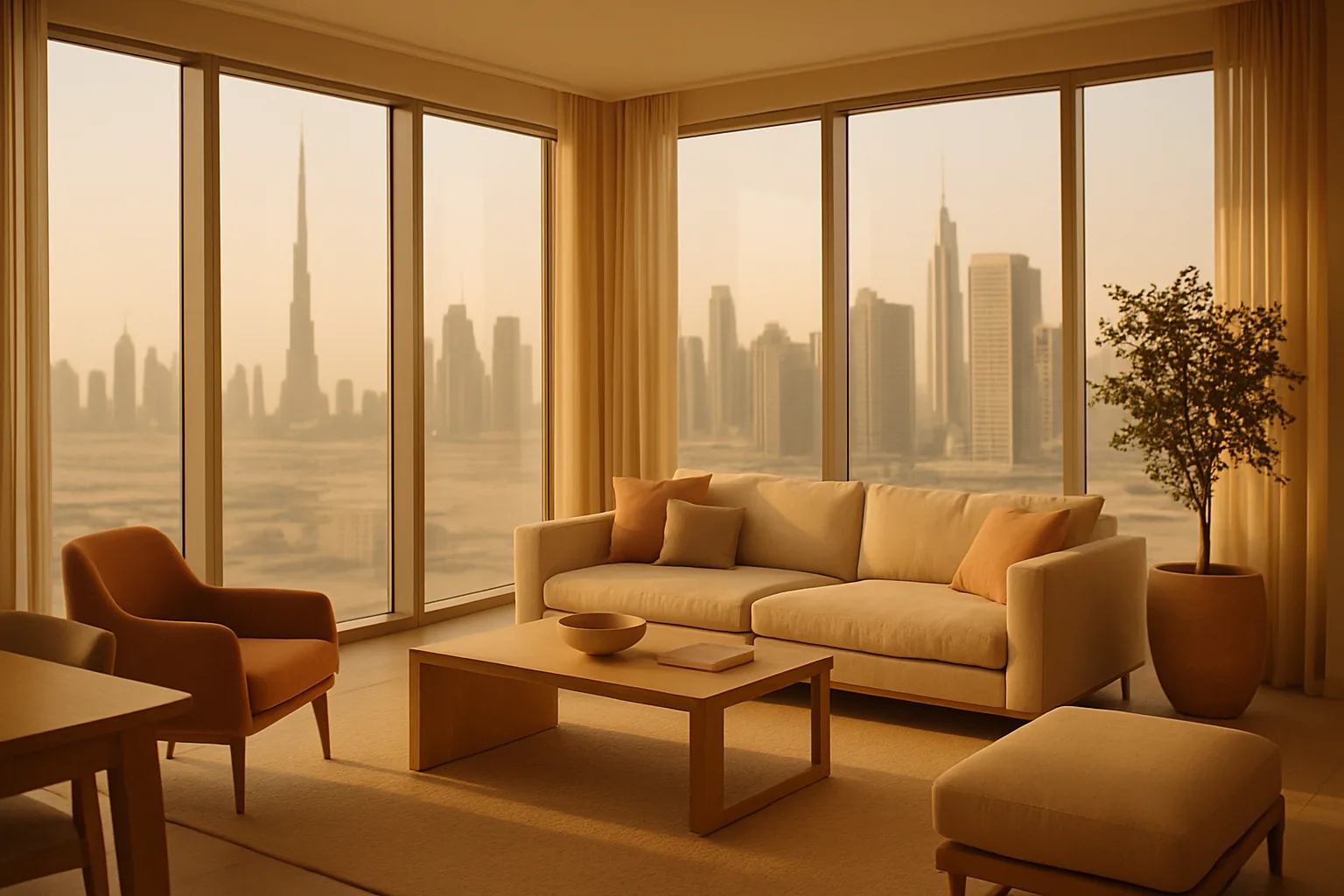
The Dubai real estate market operates differently than most global markets, and understanding these differences matters whether you're buying a studio in JVC or a villa on the Palm. Let's cut through the marketing noise and look at how this market actually works.
Understanding the Dubai real estate market structure
Dubai's property market divides into freehold and leasehold zones. Freehold areas—where foreigners can own property outright—cover most of what people think of as "new Dubai." This includes Downtown Dubai, Dubai Marina, Business Bay, Arabian Ranches, Dubai Hills Estate, and virtually every master-planned community built in the last two decades.
The Real Estate Regulatory Agency (RERA) oversees all real estate activity in the emirate, from developer licensing to broker registration. RERA maintains the Oqood system, a public register of all off-plan projects that lets you verify whether that shiny new development actually has approval before you hand over a deposit.
The market operates on two parallel tracks: ready properties (completed units you can move into immediately) and off-plan (under construction). Off-plan typically trades 20-30% below equivalent ready properties, though this spread fluctuates based on delivery timelines and developer reputation.
Current pricing across property types and areas
Pricing in 2026 varies dramatically based on location, developer, and completion status. Here's what you'll actually pay across Dubai's main property types:
| Property Type | Price Range (AED) | Typical Locations |
|---|---|---|
| Studio | 500,000 - 1,200,000 | JVC, JVT, Dubai South, Business Bay |
| 1-Bedroom | 800,000 - 2,500,000 | Marina, Downtown, Business Bay, Dubai Hills |
| 2-Bedroom | 1,500,000 - 5,000,000 | Marina, JBR, Palm Jumeirah, MBR City |
| 3-Bedroom | 2,500,000 - 15,000,000 | Downtown, Palm, Dubai Hills, Emirates Hills |
| Villas | 3,000,000 - 50,000,000+ | Arabian Ranches, Dubai Hills, Palm Jumeirah |
These ranges reflect both off-plan and ready properties. A 1-bedroom in Jumeirah Village Circle might cost AED 900k, while the same-sized unit in Downtown Dubai's Address Residences could reach AED 2.2M. Location premium is real and substantial.
Areas like Dubai Marina, JBR, and Downtown Dubai command premium pricing due to established infrastructure, beachfront access, or proximity to employment hubs like DIFC. Emerging areas like Dubai South, Tilal Al Ghaf, and parts of Mohammed bin Rashid City offer better value but trade convenience for lower entry points.
Who's building what: The developer landscape
Dubai's developer landscape splits into established blue-chip names and aggressive mid-tier players. Understanding who's who matters because developer reputation directly impacts resale value and rental appeal.
Emaar, Nakheel, Meraas
Premium pricing, established delivery track records, strong resale values. Emaar dominates with Downtown Dubai, Dubai Hills, and Dubai Creek Harbour. Nakheel built Palm Jumeirah. Meraas focuses on lifestyle-oriented waterfront communities.
Azizi, Danube, Binghatti
Competitive pricing, aggressive delivery schedules, value-focused positioning. These developers target investor buyers and first-time purchasers with attractive payment plans and lower per-square-foot pricing.
Mid-tier developers like DAMAC, Sobha Realty, and Ellington Properties occupy the space between—delivering quality product at pricing below Emaar but above the volume players. Aldar, primarily known for Abu Dhabi developments, has expanded into Dubai with premium projects.
Developer selection impacts everything from build quality to community management to eventual exit strategy. A DAMAC or Sobha property typically holds value better than comparable units from lesser-known developers, even at identical specifications.
Legal framework and buyer protections
Dubai's real estate legal framework has evolved significantly since the market corrections of 2008-2009. The escrow law (Law No. 8 of 2007) requires developers to deposit all off-plan buyer payments into escrow accounts monitored by the Dubai Land Department. Funds release to developers only as construction milestones are verified and approved.
This system protects buyers from developer insolvency and ensures that your payments actually fund construction rather than disappearing into corporate accounts. The DLD maintains oversight of all escrow accounts and can freeze releases if construction stalls.
Title registration happens through the DLD upon completion and final payment. You receive a title deed (similar to a deed of trust in Western markets) that establishes clear ownership. The registration process typically takes 2-4 weeks after handover and incurs a 4% transfer fee plus a nominal registration charge.
For off-plan purchases, you'll receive an Oqood certificate—proof of your purchase contract registered with RERA. This isn't a title deed but confirms your contractual right to the property upon completion. The Oqood system is searchable, letting anyone verify project approvals and buyer registrations.
Financing and payment options
Mortgage financing in Dubai varies significantly based on residency status. UAE residents can typically access 75-80% loan-to-value ratios, while non-residents face 50-60% LTV caps. For off-plan properties, banks impose stricter requirements, often limiting to 50% LTV regardless of residency status.
Interest rates in 2026 range from 4.5% to 6.5% depending on bank, loan amount, and borrower profile. Most mortgages carry 20-25 year terms. Foreign income is acceptable for mortgage qualification, though banks scrutinize documentation more carefully for non-residents.
Developer payment plans often present more attractive options than traditional mortgages, particularly for off-plan purchases. Common structures include:
- 60/40 plans: 60% during construction in installments, 40% on handover
- 40/60 plans: 40% during construction, 60% on completion (often mortgageable)
- 1% monthly: Pay 1% per month over construction period, remainder on handover
- Post-handover: Extended payment terms (1-5 years) after property delivery
These payment structures let buyers control properties with relatively small upfront capital. A AED 1.5M apartment on a 60/40 plan with 24-month construction might require only AED 600k spread over two years, with the remaining AED 900k due on handover—at which point you can arrange traditional mortgage financing.
Tax advantages and ownership benefits
Dubai's tax environment remains one of the market's strongest selling points. There is no property tax, no annual wealth tax on real estate holdings, no capital gains tax on property sales, and no inheritance tax on property transfers. This zero-tax structure makes Dubai unusually attractive for buy-and-hold investors and those planning multi-generational wealth transfers.
The only transactional costs are the 4% DLD transfer fee on purchases and ongoing service charges (typically AED 10-30 per square foot annually for apartments, less for villas). Service charges cover community maintenance, security, common area upkeep, and amenities.
Property ownership of AED 2M or more qualifies buyers for UAE Golden Visa residency—a renewable 10-year residence permit that doesn't require employment sponsorship. This visa extends to spouse and children, making property purchase a viable residency pathway for families. The Golden Visa program has attracted significant capital inflow since its expansion in 2022.
Rental yields in Dubai typically range from 5-8% gross annually, with higher yields in emerging areas and more modest returns in established premium zones. These yields substantially exceed those available in London, Singapore, Hong Kong, or most Western European cities, though they come with higher vacancy risk and market volatility.
Popular listing platforms Property Finder and Bayut dominate the rental and sales market, giving property owners broad exposure to tenant and buyer pools. Rental regulations favor landlords more than tenant-friendly markets like New York or Berlin, with straightforward eviction processes for non-payment and annual rent increases permitted within RERA-regulated caps.
Frequently asked questions
Can foreigners buy property anywhere in Dubai?
Foreigners can purchase freehold property in designated freehold zones, which include most of new Dubai—Downtown, Marina, Business Bay, JVC, Arabian Ranches, Palm Jumeirah, and all major master-planned communities. You cannot buy freehold in traditional Dubai neighborhoods like Deira or Bur Dubai, though long-term leasehold (99 years) is sometimes available.
What are the actual costs beyond the property price?
Expect 4% DLD transfer fee, approximately 2-3% for agency commission (if using a broker), AED 4,000-10,000 in mortgage arrangement fees if financing, and ongoing service charges of AED 10-30 per square foot annually. For a AED 2M property, total acquisition costs typically run AED 80,000-140,000 beyond the purchase price.
Is off-plan safer than buying ready property?
Off-plan isn't inherently safer or riskier—it's different risk. Escrow law protects your payments, but you face construction delay risk and market fluctuation risk during the build period. Ready properties eliminate construction uncertainty but typically cost 20-30% more and offer less flexible payment structures.
How long does the buying process take?
For ready properties with cash purchase, 2-4 weeks from offer to title deed. With mortgage financing, 6-8 weeks. Off-plan purchases involve immediate contract signing and Oqood registration, but title deed transfer happens only upon project completion, which can be 1-4 years depending on construction timeline.
Which areas offer the best value in 2026?
Dubai South, Jumeirah Village Circle (JVC), Dubai Sports City, and parts of Mohammed bin Rashid City offer the best price-per-square-foot entry points. These areas sacrifice some convenience and established infrastructure for 30-50% lower pricing than Dubai Marina or Downtown, making them popular with investors targeting rental yields over capital appreciation.