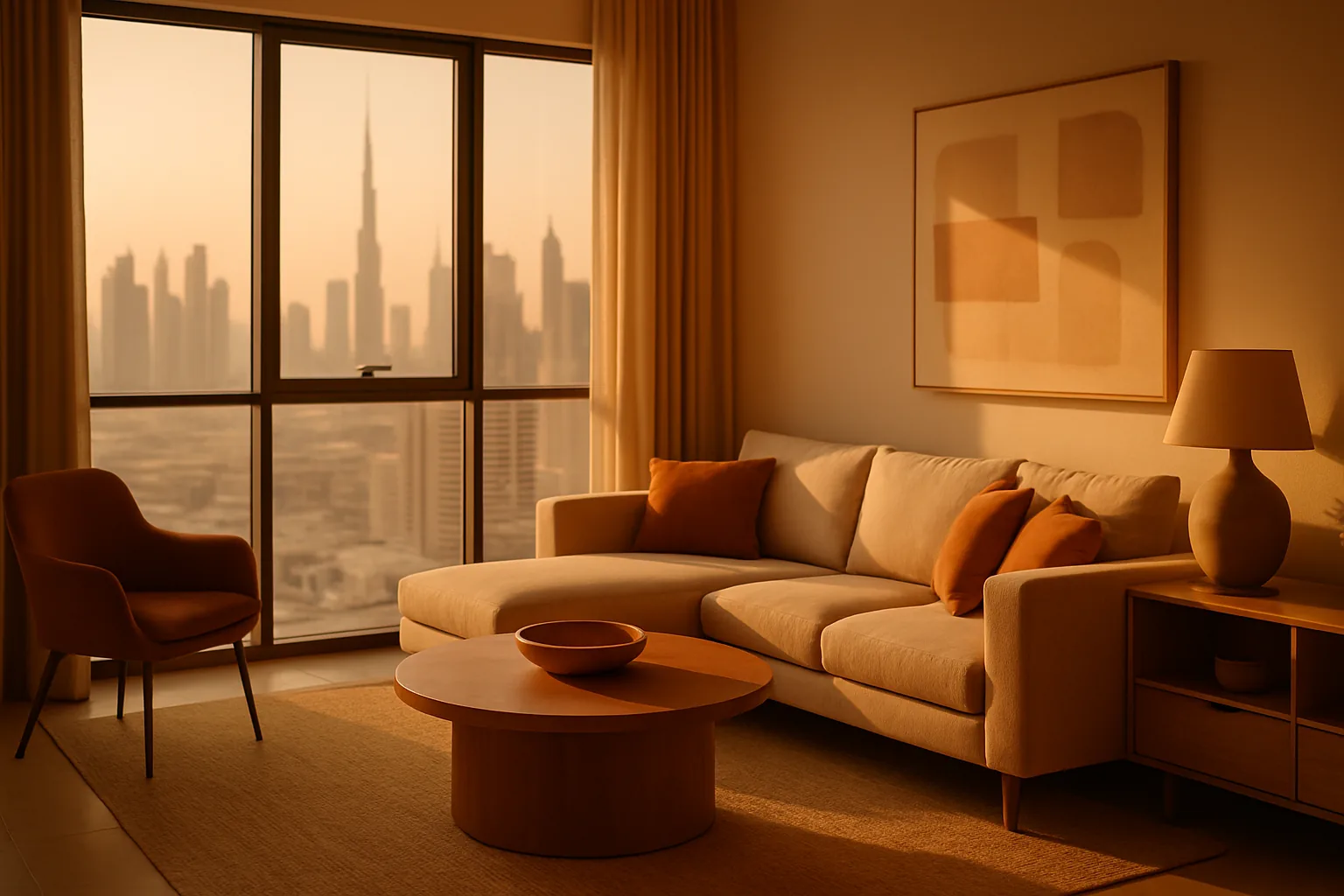
Dubai Residential: Rents Soften, Prices Hold
Average residential rents in Dubai declined 6.2% from the previous three months in Q2 2026, extending a trend that left them 2.6% lower than the same quarter a year earlier, as Gulf News reported citing CBRE Middle East's Q2 2026 UAE Real Estate Market Review. Despite the rental softness, home sales prices in Dubai remained 1.9% higher year on year — a split that signals the ownership and rental markets are responding to different pressures.
CBRE Middle East linked the slowdown to softer demand, fewer new project launches, and increased housing supply. Around 18,000 residential units were completed across Dubai during the first half of 2026, adding meaningfully to the stock available to renters and buyers alike.
Transaction volumes tell a more striking story. Fewer than 37,000 residential transactions were recorded in Dubai during Q2 2026, a 29% decline from more than 51,000 sales in Q2 2025. Total deal value fell to Dh88 billion, compared with nearly Dh154 billion a year earlier — a contraction that reflects both lower volumes and a shift in the mix of what is selling.
Dubai Offices and Retail Stay Tight
While residential demand cooled, Dubai's commercial real estate continued to outperform. Average office rents in Dubai increased 13% in the year to the end of Q2 2026, with prime office rents rising even faster at 16% over the same period. Dubai office occupancy remained at approximately 94%, with demand concentrated in DIFC, TECOM and DMCC.
Retail was similarly resilient. Dubai retail occupancy remained at approximately 98%, with rents increasing by around 3%. The near-full occupancy figure leaves little slack for new entrants looking for space in established centres.
Industrial assets also held firm, with rental growth continuing across Dubai Industrial City, Dubai Investments Park and National Industries Park.
Abu Dhabi Residential Boom
If Dubai's residential market is in a period of recalibration, Abu Dhabi's is in an outright expansion. Abu Dhabi property values rose 21.6% from a year earlier in Q2 2026, with apartment prices surging 24.4% year on year. Average rents remained 3.6% higher year on year despite some moderation, according to CBRE Middle East.
Abu Dhabi residential sales reached Dh32 billion in Q2 2026, a 150% increase from Q2 2025. The number of transactions rose by around 80% year on year. Off-plan homes accounted for approximately 83% of transactions and 85% of total sales value — a structural feature of the market that international buyers should factor into their due-diligence process, given the different risk profile of off-plan versus ready units.
Abu Dhabi Commercial and Industrial Momentum
Abu Dhabi's office market mirrored its residential strength. Average office rents rose nearly 16% in the year to the end of Q2 2026, and occupancy reached approximately 96% — above Dubai's comparable figure. Demand was strongest in Abu Dhabi Global Market. Less than 300,000 square metres of new office space is expected to be completed in Abu Dhabi between 2026 and 2027, which, against a 96% occupancy backdrop, suggests continued upward pressure on rents.
Abu Dhabi retail occupancy stood at 95%, with rents remaining largely stable.
The industrial segment received a significant policy tailwind. Abu Dhabi's industrial market benefited from Dh48.5 billion in investment commitments announced through the Make it in the Emirates initiative, a figure that sits alongside the broader data point that industrial exports reached Dh262 billion in 2025.
On the wider economic picture, CBRE expects the UAE economy to record a marginal contraction of 0.04% in 2026 — a number so small it amounts to effective stagnation rather than a meaningful downturn, though it is worth noting for investors building return scenarios.
What This Means for International Buyers
The Q2 2026 data, as reported by Gulf News, presents international investors with a genuinely two-speed UAE market rather than a single narrative to accept or reject.
In Dubai, the easing of residential rents alongside a sharp drop in transaction volumes suggests that buyers who have been waiting for conditions to shift now have a different pricing environment to work with than existed a year ago. Sales prices holding above year-ago levels despite softer volumes indicates that sellers are not yet under acute pressure — but the gap between rental yields implied by falling rents and still-elevated sales prices is worth modelling carefully before committing capital.
Dubai's commercial market tells a more straightforward story: office and retail vacancy is functionally negligible, and rent growth in the office segment — particularly at the prime end — continues to reward investors with income-producing commercial assets in the right sub-markets. DIFC, TECOM and DMCC remain the focal points of occupier demand, and that concentration matters when selecting assets.
Abu Dhabi's residential surge — with values up 21.6% and sales value up 150% — will attract attention, but the dominance of off-plan product (approximately 83% of transactions) means that much of the activity is forward-looking rather than immediately investable in a ready-property sense. International buyers less familiar with the Abu Dhabi market should treat the off-plan weighting as a due-diligence flag, not a deterrent, and assess developer track record and completion timelines accordingly.
Finally, CBRE's forecast of a marginal 0.04% economic contraction for the UAE in 2026 is a useful macro anchor. It does not project a recession, but it does caution against assuming that the headline growth story of recent years will automatically continue at the same pace. Selective, segment-specific positioning — rather than broad-brush UAE exposure — appears to be what the data supports.
Frequently asked questions
By how much did Dubai residential rents fall in Q2 2026?
Average residential rents in Dubai fell 6.2% from the previous three months in Q2 2026 and were 2.6% lower than a year earlier, according to CBRE Middle East's Q2 2026 UAE Real Estate Market Review as reported by Gulf News.
How did Abu Dhabi residential sales perform in Q2 2026 compared with a year earlier?
Abu Dhabi residential sales reached Dh32 billion in Q2 2026, a 150% increase from Q2 2025. The number of transactions also rose by around 80% year on year, with off-plan homes accounting for approximately 83% of transactions and 85% of total sales value.
What happened to Dubai office rents in the year to Q2 2026?
Average office rents in Dubai increased 13% in the year to the end of Q2 2026, while prime office rents rose 16% over the same period. Dubai office occupancy remained at approximately 94%, with demand concentrated in DIFC, TECOM and DMCC, per CBRE Middle East.
What is CBRE's outlook for the UAE economy in 2026?
According to CBRE Middle East, the UAE economy is expected to record a marginal contraction of 0.04% in 2026.