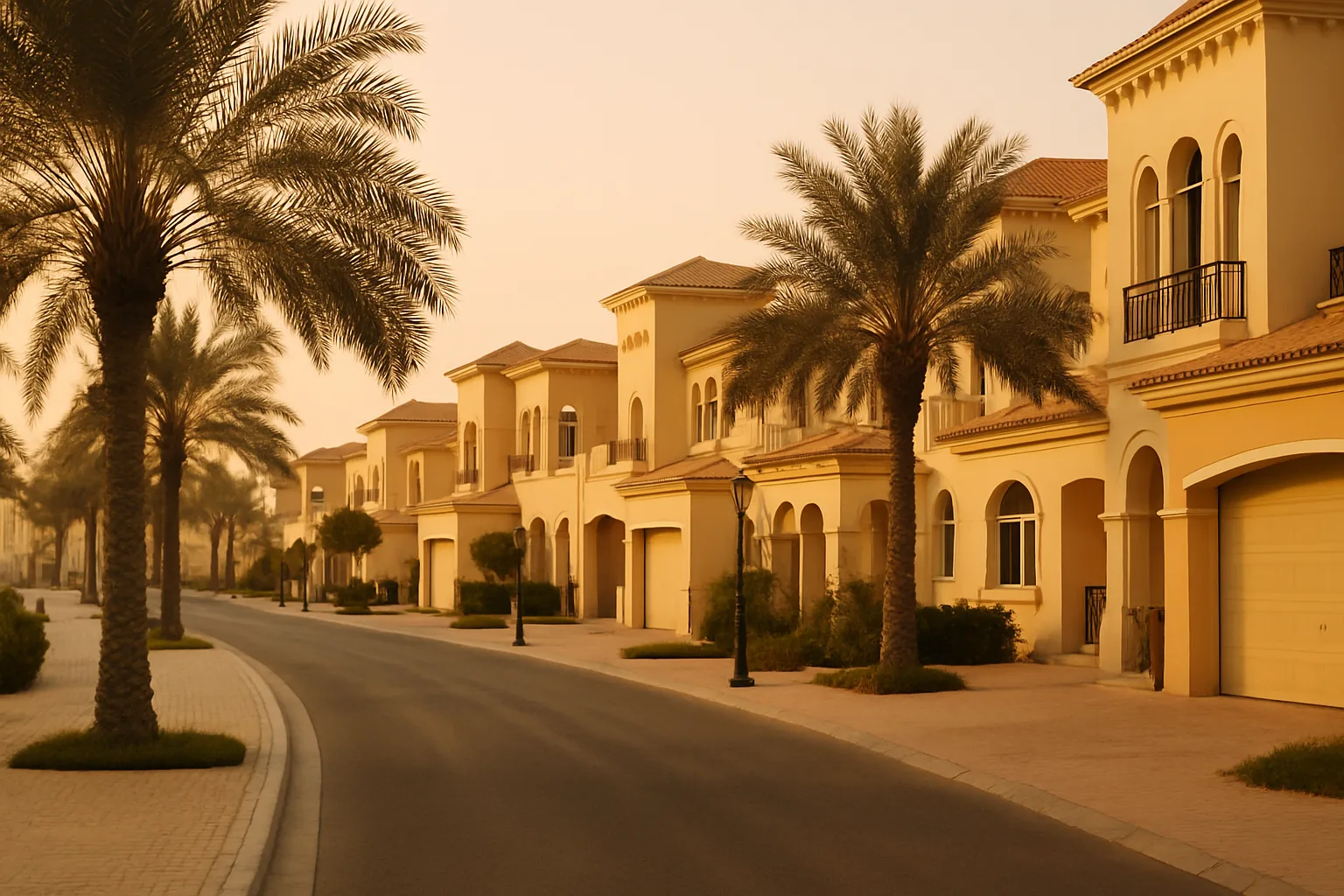
What freehold actually means in Dubai
Freehold in Dubai gives you complete ownership of both the property and the land beneath it, with no time limit. Your name goes on the title deed registered with the Dubai Land Department, and you can sell, lease, mortgage, or pass it to heirs without restriction.
This wasn't always the case. Before 2002, only UAE and GCC nationals could own property in Dubai. When the government opened designated areas to foreign freehold ownership, it created the foundation for Dubai's real estate boom. Today, most residential areas built after 2002 are freehold zones.
The key distinction: freehold means perpetual ownership. You're not renting from the government for 99 years. You own it the same way you'd own property in London, Toronto, or Singapore. The title deed has no expiry date.
Freehold vs leasehold: the practical differences
Dubai also offers leasehold properties, typically with 99-year terms (sometimes 10-30 years in older developments). Here's what changes:
| Factor | Freehold | Leasehold |
|---|---|---|
| Ownership duration | Perpetual | 10-99 years (most commonly 99) |
| Foreign buyer eligibility | Yes, in designated areas | Yes, but limited areas |
| Mortgage availability | Standard LTV: 75-80% residents, 50-60% non-residents | Lower LTV, fewer banks participate |
| Resale value impact | None | Decreases as lease term shortens |
| Title deed type | Pink title deed (freehold) | Blue title deed (leasehold) |
| Golden Visa eligible | Yes, if AED 2M+ | No |
The practical impact: leasehold properties are harder to finance, harder to sell as the term shortens, and don't qualify for residency visas. Most international buyers focus exclusively on freehold for these reasons.
You'll occasionally see leasehold in older parts of Jumeirah or Deira, but the vast majority of inventory from major developers—Emaar, DAMAC, Meraas, Nakheel—is freehold.
Where foreigners can buy freehold property
The Real Estate Regulatory Agency designates specific freehold areas where foreign nationals can own property. The list now includes over 40 areas covering most of what people think of as "Dubai."
Here are the main freehold zones by popularity:
- Downtown Dubai: The Burj Khalifa district, premium pricing, iconic addresses
- Dubai Marina: Waterfront high-rises, established community, strong rental yields
- Business Bay: Canal-side towers, business district, mixed residential-commercial
- Palm Jumeirah: The palm-shaped island, villas and apartments, luxury segment
- Dubai Hills Estate: Master-planned by Emaar, golf course community, family-oriented
- Jumeirah Beach Residence (JBR): Beachfront living, The Walk retail strip, tourist-heavy
- Jumeirah Village Circle & Triangle (JVC/JVT): Mid-market, family communities, strong value
- Arabian Ranches 1, 2, 3: Villa communities, desert golf setting, established schools
- Mohammed Bin Rashid City (MBR City): Massive development, Meydan district, mixed typologies
- Dubai Creek Harbour: New mega-development, waterfront, long-term play
- City Walk: Urban retail-residential mix, Meraas development, pedestrian-friendly
- DIFC: Financial district, Gate Avenue luxury apartments, prime location
- Bluewaters Island: Ain Dubai location, beach access, newer inventory
Areas like Deira, old Bur Dubai, and Karama are not freehold zones for foreigners. You can rent there, but ownership is restricted to UAE nationals in those districts.
The freehold purchase process
Buying freehold property in Dubai follows a regulated process whether you're buying ready property or off-plan.
For ready (completed) freehold property:
- Reserve the property: Sign a Form A (Memorandum of Understanding) with the seller and pay a deposit (typically 10%)
- Complete due diligence: Verify the title deed is clear, no mortgage encumbrances, no disputes. Your broker or conveyancer handles this through DLD systems
- Arrange financing: If using a mortgage, get pre-approval and complete bank valuation (2-3 weeks)
- Transfer at DLD: Both parties appear at a Dubai Land Department trustee office with passports, title deed, NOC from developer (confirming no service charge arrears), and funds
- Pay transfer fees: 4% DLD fee plus admin charges (roughly AED 5,000-7,000 total for admin/trustee)
- Receive title deed: New title deed issued in buyer's name, usually same day or within 48 hours
For off-plan freehold property:
- Reserve with developer: Pay booking fee (typically AED 10,000-50,000 depending on unit price)
- Sign SPA: Sales and Purchase Agreement within 2 weeks, pay initial installment (usually 10-20%)
- Follow payment plan: Most developers offer 60/40, 40/60, or post-handover plans linked to construction milestones
- Interim registration: Developer registers the sale with Oqood system (Dubai's off-plan register), you receive an Oqood certificate
- Completion and handover: Final payment, snagging inspection, key collection
- Final title deed: Developer transfers freehold title deed through DLD within 6 months of completion (sometimes longer in practice)
The escrow law (Law No. 8 of 2007) requires all off-plan payments to go through DLD-approved escrow accounts, protecting your funds if the developer fails to deliver. Check that the project has an escrow account before paying anything beyond the booking fee.
Costs and fees for freehold property
Beyond the purchase price, here's what you'll pay for freehold property:
One-time purchase costs:
- DLD transfer fee: 4% of purchase price (buyer typically pays, sometimes negotiated)
- Trustee fee: AED 4,000 + VAT
- Admin fee: AED 580
- Mortgage registration: 0.25% of loan amount + AED 290 (if financing)
- Real estate agent: 2% + VAT (sometimes seller covers)
- Conveyancing/legal: AED 5,000-15,000 if using a lawyer (optional but recommended for first-timers)
Annual ownership costs:
- Service charges: AED 10-30 per sqft depending on development (covers facilities, maintenance, security)
- Chiller fees: If district cooling, varies by usage (can be AED 5,000-15,000 annually for apartments)
- DEWA utilities: Electricity and water, pay-as-you-use plus AED 500-1,000 annual housing fee
- Property management: 5-8% of annual rent if you're leasing it out
There is no property tax, no capital gains tax, and no income tax on rental income. This makes Dubai one of the most tax-efficient freehold markets globally.
Total Purchase Costs
Purchase price: AED 1,500,000
DLD 4%: AED 60,000
Admin/trustee: AED 5,000
Agent 2%: AED 30,000
Total: AED 1,595,000
Total Purchase Costs
Purchase price: AED 3,000,000
DLD 4%: AED 120,000
Admin/trustee: AED 5,000
Agent 2%: AED 60,000
Total: AED 3,185,000
Golden Visa eligibility through freehold ownership
Buying freehold property worth AED 2 million or more makes you eligible for the UAE Golden Visa—a 10-year renewable residency visa with minimal stay requirements.
Requirements:
- Property value of at least AED 2M (can be one property or multiple combined)
- Must be freehold (leasehold doesn't count)
- Property must be owned outright or with a mortgage (not under developer payment plan)
- Can be residential or commercial freehold property
The Golden Visa lets you sponsor family members, doesn't require an Emirati sponsor, and remains valid even if you're outside the UAE for extended periods. You'll need to enter the country once every 180 days to maintain the visa.
If your freehold purchase is below AED 2M, you can still get a standard 2-3 year renewable investor visa, though requirements and renewal processes are more involved.
Frequently asked questions
Can I get a mortgage as a foreigner for freehold property in Dubai?
Yes. UAE banks offer mortgages to foreign nationals with loan-to-value ratios of 50-60% for non-residents and 75-80% for UAE residents. You'll need salary transfers, bank statements, passport copies, and a property valuation. Some international banks like HSBC and Mashreq have dedicated expat mortgage products.
Do I need to live in Dubai to own freehold property?
No. There's no residency requirement to buy or own freehold property in Dubai. You can purchase as a non-resident, hold the property purely as an investment, and manage it remotely through property management companies. Many foreign investors never set foot in their Dubai properties.
What's the difference between a pink and blue title deed?
A pink title deed indicates freehold ownership with no time limit, while a blue title deed indicates leasehold ownership with a fixed term (usually 99 years). Foreign buyers should focus on pink title deeds, as they offer better financing terms, higher resale values, and Golden Visa eligibility.
Can I rent out my freehold property in Dubai?
Yes, you can lease your freehold property freely. You'll need to register the tenancy contract through Ejari (the official rental registration system) and pay a small registration fee. Rental yields in Dubai typically range from 5-8% depending on area and property type. There's no income tax on rental earnings.
How long does it take to complete a freehold property purchase?
For ready properties with cash payment, you can complete the transaction in as little as one week once paperwork is ready. With mortgage financing, expect 3-4 weeks for bank approval and valuation. Off-plan purchases follow the construction timeline—typically 1-3 years from purchase to handover depending on the project stage when you buy.