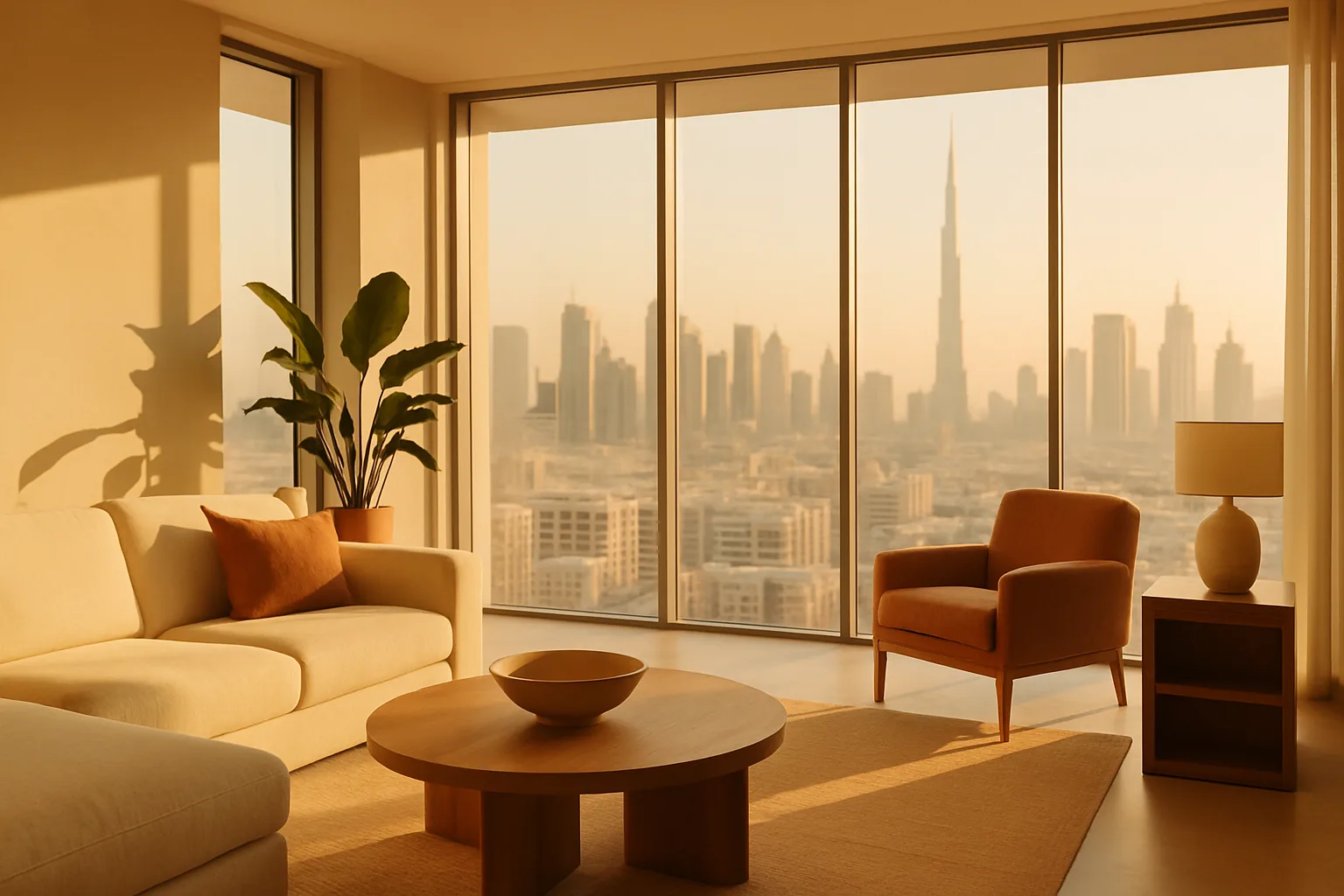
Where foreigners can buy houses in Dubai
The Dubai Land Department designates specific freehold areas where foreign nationals can own property outright with full title deed rights. Most of new Dubai qualifies, but you can't buy a villa in, say, Al Safa 1 or Umm Suqeim 1 as a foreigner—those remain UAE/GCC national zones.
Popular freehold villa communities include:
- Arabian Ranches 1, 2, 3 — desert golf community vibe, mature landscaping in AR1, prices AED 3.5M-10M
- Dubai Hills Estate — central location, contemporary architecture, prices AED 4M-18M
- Palm Jumeirah — beachfront prestige, prices AED 8M-50M+
- Mohammed bin Rashid City (MBR City) — massive master plan, Mediterranean clusters, prices AED 3.5M-12M
- Jumeirah Village Circle/Triangle (JVC/JVT) — affordable entry point, townhouses AED 2.5M-4.5M
- Damac Hills/Hills 2 — golf community, Trump-branded options, prices AED 3M-9M
- Dubai South — near airport expansion, prices AED 2.5M-5M
- Tilal Al Ghaf — lagoon community by Majid Al Futtaim, prices AED 4M-12M
The freehold designation matters for financing, title deed registration, and long-term security. If an area isn't freehold, you're looking at leasehold maximum, which caps at 99 years and comes with restrictions.
Price ranges by area and property type
Dubai villa pricing breaks into clear tiers based on location, developer pedigree, and build quality. Here's the 2026 market reality:
| Community Type | Typical Size | Price Range (AED) | Key Areas |
|---|---|---|---|
| Budget townhouses | 2,000-2,500 sqft | 2.5M-3.5M | JVC, JVT, Dubai South, Dubailand |
| Mid-tier villas | 2,800-4,000 sqft | 3.5M-6M | Arabian Ranches, Damac Hills, Reem, Town Square |
| Premium master communities | 4,000-7,000 sqft | 6M-15M | Dubai Hills, MBR City, Tilal Al Ghaf, Arabian Ranches 3 |
| Luxury waterfront | 5,000-10,000 sqft | 15M-50M+ | Palm Jumeirah, Dubai Creek Harbour, Emirates Hills |
Off-plan typically prices 20-30% below ready properties in the same area, but you're waiting 18-36 months for handover. Developers like Emaar, Meraas, and Sobha Realty command premium pricing over secondary developers, but you're paying for build quality, on-time delivery track record, and community management.
Villa vs townhouse: what you're actually getting
The terminology matters because it affects price, plot ownership, and resale dynamics:
Attached units, smaller plots
Typically 2-3 bedrooms, 2,000-3,000 sqft built-up, small garden or courtyard. You own the plot but it's often 1,500-2,500 sqft. Lower service charges (AED 8-15/sqft). More affordable entry point. Limited privacy between units. Examples: JVC clusters, Damac Hills townhouses, Nshama Town Square.
Detached, larger plots
Typically 3-6 bedrooms, 3,500-8,000+ sqft built-up, private garden and often pool. Plot sizes 3,000-10,000+ sqft. Higher service charges (AED 15-30/sqft) but better resale value. Full privacy. Examples: Arabian Ranches, Dubai Hills Estate, Palm Jumeirah villas.
The plot size distinction is critical. A 3,000 sqft villa on a 2,000 sqft plot (Dubai South) means you're maxing out floor area ratio—minimal outdoor space. A 4,000 sqft villa on an 8,000 sqft plot (Arabian Ranches) gives you actual garden, pool, maybe a guest house.
Service charges apply to the entire plot and any common facilities (gates, landscaping, community pools). Budget AED 40,000-120,000 annually depending on villa size and community. Palm Jumeirah frond villas can hit AED 200,000+ annually when you factor in beach access and private facilities.
Developer payment plans and mortgage reality
Off-plan houses in Dubai typically offer payment plans that defer most of the purchase price until handover or beyond. Common structures:
- 60/40 plan — 60% during construction in installments, 40% on handover
- 40/60 plan — 40% during construction, 60% on handover (rare, developer-dependent)
- 1% monthly — split total price across construction timeline, popular with Damac and Azizi
- Post-handover plans — 50% during construction, 50% over 2-5 years after you move in
The appeal is clear: you can secure a AED 4M villa with AED 400,000 down (10%) and staged payments of AED 2M over 24 months, then arrange a mortgage for the final AED 1.6M balloon payment at handover.
Mortgage reality for villas is stricter than apartments. According to the UAE Central Bank, loan-to-value caps are 75% for UAE residents and 50% for non-residents on ready properties under AED 5M. For properties above AED 5M, LTV drops to 65% residents, 40% non-residents.
Off-plan mortgages cap at 50% LTV regardless of residency, and many banks won't finance properties still under construction. You'll need to self-fund the construction payments, then mortgage at handover.
Non-resident buyers typically need:
- 25% deposit minimum (50% LTV cap)
- Proof of income from home country (bank statements, employment contract, tax returns)
- Existing relationship with international bank that has UAE presence (HSBC, Citi, Standard Chartered)
- Higher interest rates than residents: 4.5-6% vs 3.5-4.5% for residents
The buying process step-by-step
Dubai's property purchase process is standardized and moves quickly once you have financing sorted:
1. Reserve the property
Pay a reservation fee (typically AED 20,000-50,000 for villas) to take the unit off the market. This is refundable if the sale doesn't proceed, but terms vary by developer.
2. Sign the Sale and Purchase Agreement (SPA)
Within 14 days, you'll sign the SPA with the developer (off-plan) or seller (secondary market). For off-plan, the SPA is registered with Dubai Land Department and includes the payment schedule. For secondary, this becomes the Memorandum of Understanding (MOU).
3. Pay the deposit
Typically 10% of purchase price on SPA signing for off-plan, 10-20% for secondary sales. This goes into an escrow account managed by the developer (off-plan) or agreed-upon mechanism (secondary).
4. Complete construction payments (off-plan only)
Follow the payment plan linked to construction milestones. Developer sends payment requests to your email; you have 14-21 days to pay each installment. Funds go into DLD-regulated escrow accounts.
5. Secure mortgage pre-approval (if applicable)
Start this process 3-4 months before handover for off-plan, immediately for ready properties. Bank valuation, income verification, credit checks. Takes 2-4 weeks for approval, another 2-3 weeks for disbursement.
6. Title deed transfer
On handover (off-plan) or after MOU (secondary), you visit a DLD trustee office with the seller. Pay the 4% transfer fee plus AED 4,000-5,000 admin costs. If using a mortgage, the bank coordinates this. You receive the title deed same day or within 48 hours.
7. Register utilities and move in
Connect DEWA (electricity/water), internet, and register with the property management company. For villas, budget AED 4,000-10,000 for connection deposits.
Total timeline: 1-2 weeks for secondary market cash purchases, 4-6 weeks with mortgage, 18-36 months for off-plan from SPA to handover.
Costs beyond the purchase price
The villa sticker price is just the start. Budget for these additional costs:
Upfront transaction costs:
- DLD transfer fee: 4% of purchase price
- Trustee office admin: AED 4,000-5,000
- Real estate agent (buyer-side, if applicable): 2% + VAT (often covered by seller in Dubai)
- Mortgage arrangement fee: 1% of loan amount
- Valuation fee: AED 2,500-4,000
- DEWA connection: AED 4,000-10,000 deposit (refundable)
Annual ongoing costs:
- Service charges: AED 10-30/sqft (AED 40,000-150,000 for typical villas)
- District cooling (if applicable): AED 15,000-40,000
- DEWA utilities: AED 1,000-3,000 monthly for occupied villa
- Home insurance: AED 3,000-8,000
- Pool maintenance (if applicable): AED 500-1,500 monthly
- Garden maintenance: AED 1,000-3,000 monthly if outsourced
On a AED 5M villa, you're looking at AED 200,000 upfront transaction costs plus AED 80,000-120,000 annual operating costs. That's before any mortgage payments.
Dubai has zero property tax, zero capital gains tax, and zero income tax—but service charges effectively function as an annual cost of ownership that's higher than many international markets' property taxes.
Frequently asked questions
Can I get a Golden Visa by buying a house in Dubai?
Yes. Property purchases of AED 2M or above qualify for the UAE Golden Visa (10-year renewable residency). The property must be purchased (not mortgaged beyond 50%), and you need to retain ownership to maintain the visa. Villas in most communities qualify.
What's the cheapest area to buy a house in Dubai?
Jumeirah Village Circle (JVC), Jumeirah Village Triangle (JVT), and Dubai South offer the most affordable townhouses, starting around AED 2.5M for 2-3 bedroom units. You're trading location convenience for affordability—expect 30-40 minute drives to Downtown or Marina.
Should I buy off-plan or ready property?
Off-plan is 20-30% cheaper but requires self-funding construction payments and waiting 18-36 months. Ready properties let you move in immediately, secure mortgages easier, and avoid construction risk. If you're a non-resident investor, off-plan payment plans can be attractive; if you're relocating and need housing now, buy ready.
Do I need a real estate agent to buy a house in Dubai?
No, you can buy directly from developers for off-plan or from sellers in secondary market. However, agents registered with RERA provide access to DLD systems, handle paperwork, and don't typically cost buyers anything (seller pays commission). For international buyers unfamiliar with Dubai, an agent reduces friction significantly.
What happens if a developer goes bankrupt during construction?
UAE escrow law (Law No. 8 of 2007) requires developers to hold buyer funds in DLD-regulated escrow accounts, released only against construction milestones. If a developer defaults, DLD can freeze accounts and appoint a new developer to complete the project, or refund buyers from the escrow. High-profile developer bankruptcies in 2009-2010 led to these protections.