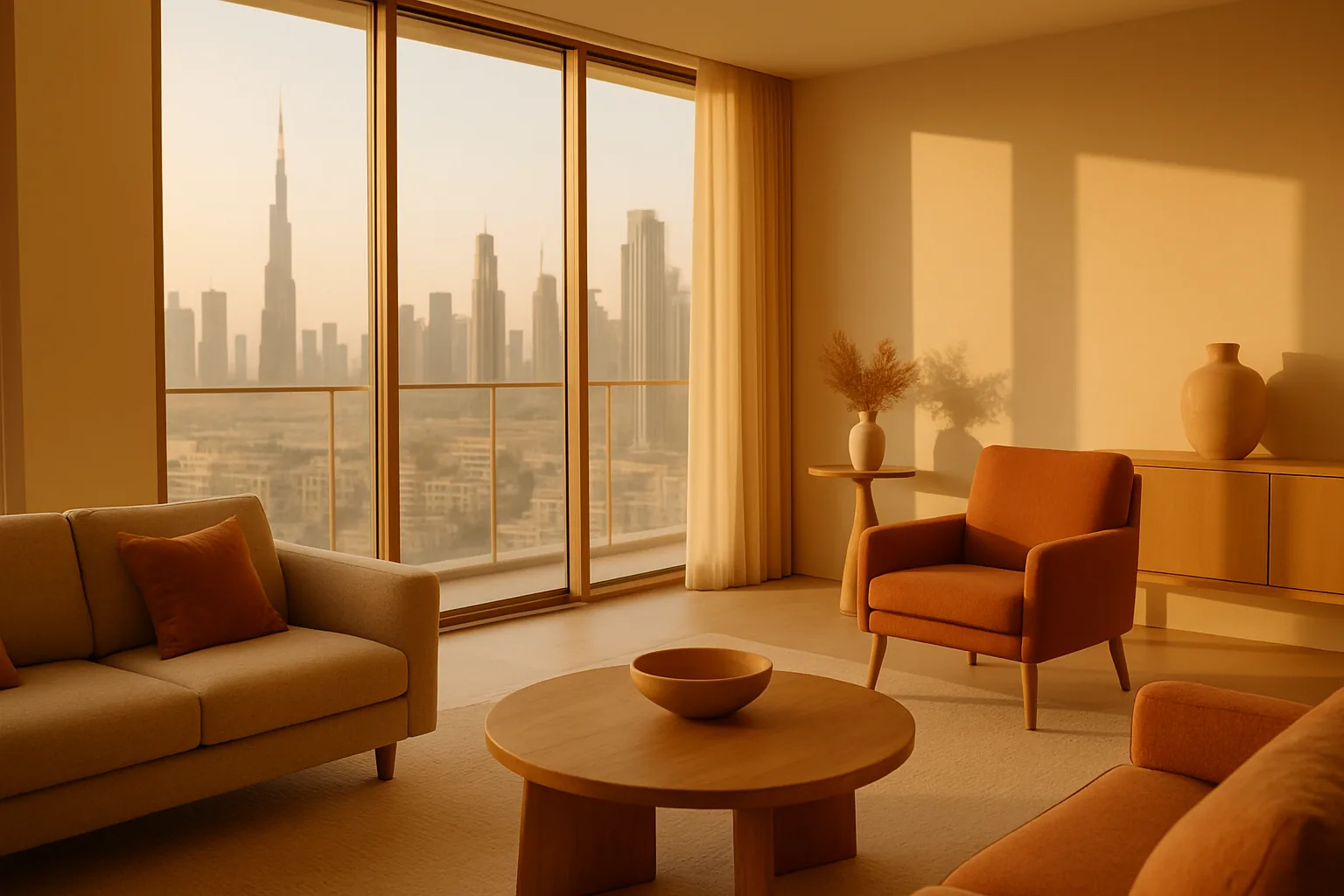
Understanding freehold vs leasehold in Dubai
Dubai property falls into two categories: freehold and leasehold. Freehold means you own the property outright with no time limit, can sell to anyone, and hold the title deed in your name. Leasehold gives you ownership rights for a fixed period—typically 99 years—after which ownership reverts to the freeholder unless renewed.
Foreign nationals can only buy freehold properties, and only in government-designated freehold zones. The Dubai Land Department maintains the official registry of all property transactions and ownership records, ensuring legal clarity on what you're buying.
Practically speaking, almost all new development areas in Dubai are freehold: Downtown Dubai, Dubai Marina, Business Bay, Dubai Hills Estate, Mohammed Bin Rashid City, and dozens more. The older areas of Deira, Bur Dubai, and certain parts of Jumeirah remain leasehold or UAE-national-only zones.
Where foreign buyers can purchase property
The freehold map has expanded significantly since 2002. Today, over 40 designated areas allow full foreign ownership. Here's where most buying activity concentrates:
- Downtown Dubai: Home to Burj Khalifa, Dubai Mall, and premium residential towers. High rental yields, strong capital appreciation, but premium pricing.
- Dubai Marina & JBR: Waterfront living with beach access. Mature community, excellent amenities, but service charges run higher due to marina maintenance.
- Business Bay: Central business district with mixed residential-commercial. More affordable than Downtown with similar connectivity.
- Dubai Hills Estate & Arabian Ranches: Family-oriented villa communities with golf courses, parks, and schools. Lower density, car-dependent.
- Palm Jumeirah: Iconic man-made island. Villas on fronds and apartments on the trunk. Premium market segment.
- Mohammed Bin Rashid City (MBR City): Massive master-planned community. Mix of villas and townhouses, strong off-plan activity.
- Jumeirah Village Circle (JVC) & Jumeirah Village Triangle (JVT): Mid-market family communities. Better value per square foot, improving infrastructure.
- Dubai Creek Harbour: Newest mega-development opposite Downtown. Long-term play, mostly off-plan.
Check the DLD's official freehold area list before committing to any purchase. Some buildings in transitional zones have freehold status while neighbors don't—always verify the specific property, not just the area.
Property types and current pricing (2026)
Pricing varies dramatically by location, developer reputation, finishing quality, and building amenities. Here's the realistic range you'll encounter in 2026:
| Property Type | Size Range | Mid-Market Areas | Premium Areas |
|---|---|---|---|
| Studio | 350-500 sqft | AED 500k-800k | AED 800k-1.2M |
| 1-Bedroom | 600-900 sqft | AED 900k-1.5M | AED 1.5M-2.5M |
| 2-Bedroom | 1,000-1,400 sqft | AED 1.5M-2.5M | AED 2.5M-5M |
| 3-Bedroom Apartment | 1,500-2,200 sqft | AED 2.5M-4M | AED 4M-8M |
| Townhouse | 1,800-2,500 sqft | AED 2.5M-4.5M | AED 4.5M-8M |
| Villa (3-4BR) | 2,500-4,500 sqft | AED 3M-6M | AED 6M-15M |
| Villa (5-6BR) | 5,000-10,000+ sqft | AED 8M-15M | AED 15M-50M+ |
Mid-market areas include JVC, JVT, Dubai South, International City, Discovery Gardens, and Sports City. Premium areas cover Downtown Dubai, Dubai Marina, Palm Jumeirah, Emirates Hills, and DIFC. Off-plan properties typically price 20-30% below equivalent ready units, though that gap has narrowed in high-demand areas.
The complete cost breakdown: fees and ongoing expenses
The sticker price is only part of your total investment. Here's what you'll actually pay:
Upfront purchase costs
- Purchase price: The agreed property value
- DLD transfer fee: 4% of purchase price (paid by buyer unless negotiated otherwise)
- Registration fee: AED 4,000 plus AED 580 for title deed issuance
- Trustee office fee: Approximately AED 2,000-4,000 for administrative processing
- NOC from developer: AED 2,000-5,000 (on resale properties, releases seller from obligations)
- Real estate agent commission: Typically 2% of purchase price plus 5% VAT
- Mortgage registration fee (if financing): 0.25% of loan amount plus AED 290
- Valuation fee: AED 2,500-3,500 if obtaining mortgage
Total upfront costs typically run 7-8% of purchase price for cash buyers, 8-9% when financing. On a AED 2M property, budget AED 140,000-180,000 for closing costs.
Ongoing ownership costs
- Service charges: AED 10-30 per sqft annually depending on building and amenities. A 1,000 sqft apartment might cost AED 10,000-30,000 yearly.
- District cooling charges: Billed separately in many newer developments, based on consumption
- DEWA (utilities): Electricity and water. Includes housing fee of 5% of consumption, waste fee, and service charges. Typical 1BR runs AED 300-600 monthly.
- Building insurance: Usually included in service charges
- Property management (for investors): 5-8% of annual rent if using a management company
Critically, the UAE has no property tax, no annual valuation tax, no capital gains tax, and no inheritance tax. Your ongoing costs are purely operational.
Off-plan vs ready properties: which makes sense
Off-plan means buying during construction, paying in installments as the project progresses. Ready (or secondary market) means buying a completed property, usually requiring immediate full payment or mortgage approval.
Buy During Construction
Advantages: Lower entry price, developer payment plans (spread payments over 2-4 years), newer designs and fittings, potential appreciation during construction.
Risks: Delivery delays (common), quality deviations from marketing materials, developer financial trouble, market downturn before handover, limited financing options (50% LTV max).
Buy Completed Unit
Advantages: Immediate occupancy or rental income, see exact unit before buying, established community amenities, better mortgage terms (75-80% LTV for residents), no construction risk.
Risks: Higher purchase price, full payment or mortgage required upfront, older fittings in resale properties, limited inventory in new developments.
The Real Estate Regulatory Agency oversees developer compliance and buyer protection through the Oqood registration system and escrow account requirements under Law No. 8 of 2007. All off-plan payments must go into project-specific escrow accounts, released to developers only as construction milestones are verified.
Despite these protections, off-plan carries execution risk. Delivery delays of 6-18 months are normal in Dubai's market. Factor this into your plans if you're relying on specific move-in dates or rental income timelines.
Developer payment plans explained
Most off-plan purchases follow structured payment schedules:
- 60/40 plans: 60% during construction, 40% on handover. Common for 2-3 year projects.
- 40/60 plans: 40% during construction, 60% on handover. Buyer-friendly but requires strong handover financing.
- 1% monthly plans: Pay 1% per month over project timeline. Extremely low initial outlay.
- Post-handover plans: 50% by handover, balance over 1-5 years after completion. Allows renting while paying.
Payment plans make Dubai accessible to buyers without immediate full capital, but read the fine print. Late payment penalties typically run 12-18% annually, and defaulting can mean losing both the property and all payments made.
Financing options for residents and non-residents
UAE mortgage lending follows Central Bank regulations with strict loan-to-value caps based on residency status and property price:
For UAE residents
- Properties under AED 5M: Up to 80% LTV (75% for non-first-time buyers)
- Properties AED 5M+: Maximum 70% LTV
- Off-plan properties: Typically 50% LTV regardless of price
For non-residents
- All ready properties: Maximum 60% LTV (some banks offer only 50%)
- Off-plan properties: 50% LTV, though many banks won't finance off-plan for non-residents
Interest rates in 2026 range from 4.5-6.5% depending on the bank, your profile, and loan amount. Most mortgages are variable rate tied to EIBOR (Emirates Interbank Offered Rate), though fixed-rate periods of 1-5 years are available at premium pricing.
Mortgage costs and requirements
- Processing fee: 1% of loan amount (sometimes negotiable)
- Valuation fee: AED 2,500-3,500
- Life insurance: Required for loan amount, cost varies by age and health
- Property insurance: Required, approximately 0.1-0.3% of property value annually
- Early settlement penalty: 1-3% of outstanding amount if you pay off early
Non-residents face additional hurdles: you'll need a UAE bank account (which requires visiting in person), salary assignment may not be possible without UAE employment, and approval timelines run 4-6 weeks versus 2-3 weeks for residents.
Golden Visa consideration
Properties valued at AED 2M or higher qualify the buyer for a 10-year Golden Visa, renewable indefinitely as long as you maintain ownership. This gives you long-term residency without UAE employment sponsorship, the ability to sponsor family members, and greater banking access.
The math matters: if you're considering properties in the AED 1.7M-2M range, the Golden Visa benefit often justifies stretching to the AED 2M threshold. The visa itself costs around AED 3,000 with medical and Emirates ID fees, but provides residency security that employment visas can't match.
Frequently asked questions
Can foreigners own property outright in Dubai?
Yes, foreign nationals can own freehold property outright in designated freehold zones, which include most of new Dubai—Downtown, Marina, Business Bay, Dubai Hills, and over 40 other areas. You receive a title deed in your name and can sell to anyone without restrictions.
What are the total costs when buying a property in Dubai?
Expect 7-9% of purchase price in upfront costs: 4% DLD transfer fee, 2% agent commission (plus VAT), AED 4,000 registration fee, and additional charges for trustee office, NOC, and mortgage registration if financing. On a AED 2M purchase, total closing costs run AED 140,000-180,000.
Do I need to live in Dubai to buy property?
No, there's no residency requirement to purchase property in Dubai. However, non-residents face stricter mortgage terms (60% LTV maximum versus 75-80% for residents) and will need to open a UAE bank account to complete the transaction.
Is off-plan safer than it used to be in Dubai?
Yes, significantly. Law No. 8 of 2007 requires all off-plan payments into escrow accounts with funds released only at verified construction milestones. RERA oversees developer compliance through the Oqood registration system. Risks remain—delays are common—but financial protections are robust compared to pre-2008.
What ongoing costs do Dubai property owners pay?
Service charges (AED 10-30 per sqft annually), DEWA utilities including 5% housing fee, and district cooling in newer buildings. There is no property tax, no capital gains tax, and no annual valuation tax in the UAE—your costs are purely operational, not tax-based.