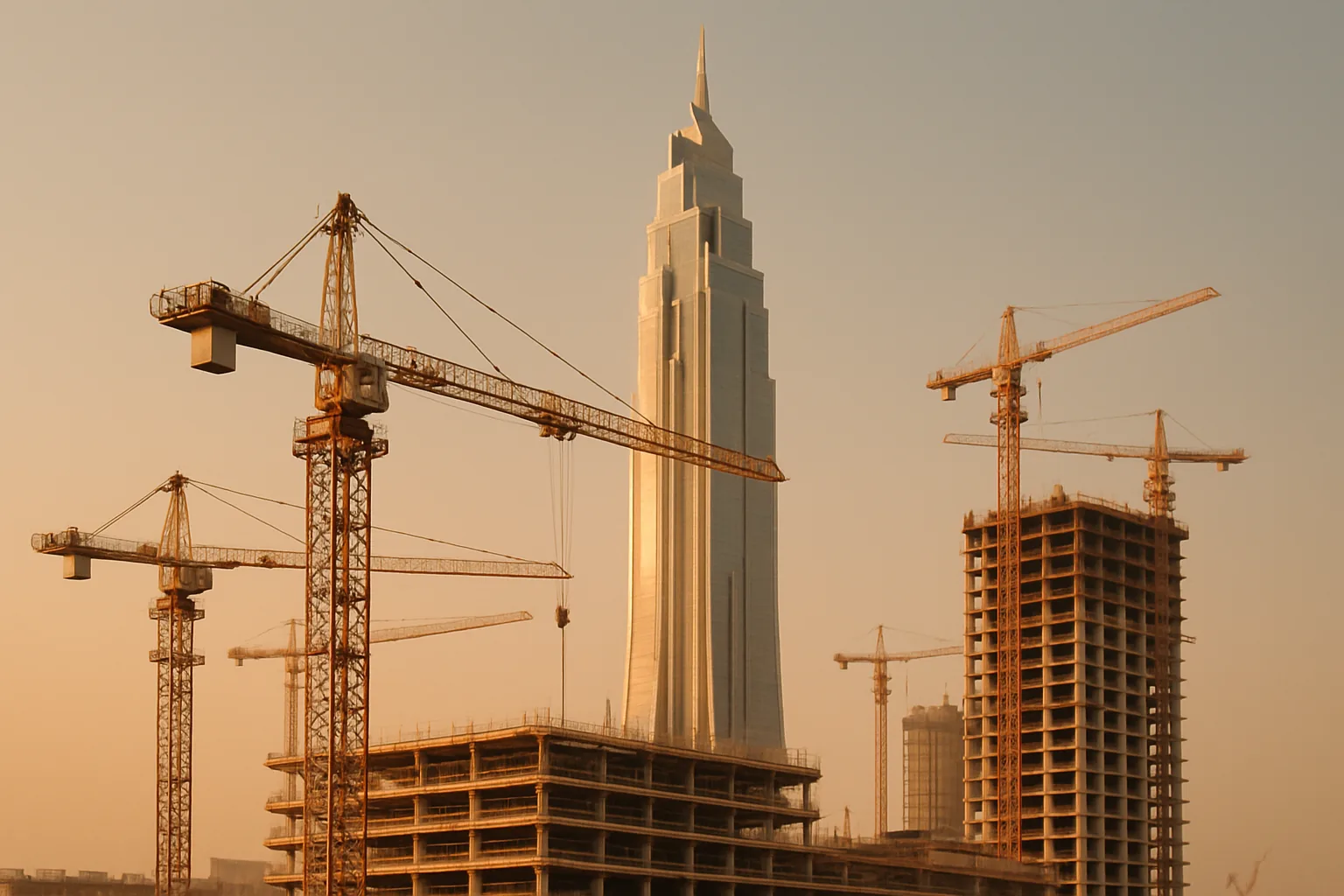
The big five: premium developers
Five developers dominate Dubai's premium segment, accounting for roughly 60% of all transaction value in the emirate. They're not interchangeable—each has carved out distinct territory.
Emaar Properties is the 800-pound gorilla. They developed Downtown Dubai (Burj Khalifa, Dubai Mall), Dubai Marina's earlier phases, Arabian Ranches, Dubai Hills Estate, and Dubai Creek Harbour. Emaar projects typically command 15-25% premiums over comparable locations. Build quality is consistently high, handover delays are less common than industry average, and resale liquidity is excellent. The trade-off: you pay top dollar upfront.
Nakheel built the Palm Jumeirah, The World islands, Jumeirah Village Circle, Discovery Gardens, and International City. They're government-owned (held by Dubai's Investment Corporation), which adds a layer of stability but sometimes slower decision-making. Their mid-market projects (JVC, JVT) offer better value than their ultra-premium Palm developments. Post-2009 restructuring, handover timelines have improved significantly.
DAMAC Properties focuses on luxury and branded partnerships—Versace, Cavalli, Fendi, Bugatti towers. Locations include Business Bay, DAMAC Hills (formerly Akoya), and Dubai Marina. DAMAC moves fast: from launch to handover is often 24-36 months. Quality perception is mixed—some projects are excellent, others have snagging issues. They're aggressive with payment plans, often offering post-handover options that appeal to investors.
Meraas develops experiential, lifestyle-heavy projects: Bluewaters Island (Ain Dubai), City Walk, La Mer, Jumeirah Bay Island. They target high-net-worth buyers who want something distinct. Pricing is premium, but locations and architectural quality justify it. Meraas projects rarely flood the market—they're selective about supply.
Aldar Properties is Abu Dhabi's largest developer, now expanding aggressively in Dubai after acquiring several portfolios. They bring institutional discipline and strong balance sheets. Their Dubai presence is newer but growing, particularly in established communities looking for quality refurbishment or redevelopment.
Mid-tier developers: volume and value
Below the premium tier, a cluster of developers focuses on volume, affordability, and investor-friendly payment plans. They're delivering the studios and one-bedrooms that fuel Dubai's rental market.
Azizi Developments is prolific in Dubai Healthcare City, Al Furjan, and MBR City. They launch dozens of projects annually, often with aggressive pricing 20-30% below comparable Emaar units. Payment plans are flexible (1% monthly is common). Build quality is functional rather than luxurious—expect standard finishes and occasional snagging. Handover delays have occurred but they've improved post-2021.
Danube Properties targets affordability and first-time buyers. Projects in Al Furjan, JAFZA, and International City start from AED 350k for studios. They offer furniture packages and post-handover plans. Finishes are basic but adequate. Their investor base skews South Asian, and resale can take longer than premium developers.
Binghatti Developers is known for distinctive facade designs (love them or hate them). Projects cluster in Jumeirah Village Circle, Business Bay, and Meydan. Pricing sits between budget and premium. They've partnered with international brands (Bugatti, Mercedes-Benz) for signature towers. Build quality has improved notably since 2020.
Sobha Realty (not to be confused with Sobha Hartland, which is Sobha's mega-community in MBR City) brings Indian construction discipline to Dubai. Their Hartland project in MBR City competes directly with Emaar's Dubai Hills. Build quality and green space are excellent. Pricing is premium but below Emaar levels. They're slower to launch but more reliable on handovers.
Ellington Properties targets the design-conscious buyer with smaller, boutique projects in Mohammed Bin Rashid City, Jumeirah Village Circle, and Dubai Hills. Units feature higher-spec finishes, better space planning, and contemporary architecture. Pricing reflects the quality—expect to pay 10-15% more than volume developers in the same area.
Boutique developers: design-led projects
A newer cohort of developers focuses on limited-edition projects with architectural distinction. They're small by unit count but punch above their weight in design and buyer experience.
Omniyat develops ultra-luxury, architecturally significant towers: One Palm by OMNIYAT (Dorchester Collection), The Opus (Zaha Hadid), ANWA in Dubai Maritime City. They partner with international hospitality brands and starchitects. Pricing starts around AED 3,000 per sqft and climbs from there. These aren't investment plays—they're lifestyle purchases.
Wasl Properties (government-owned) focuses on mixed-use, community-centric development in established areas like Al Jaddaf, Al Karama, and Jumeirah. They're redeveloping older Dubai with thoughtful urbanism. Projects are smaller scale, often walk-to-metro oriented. Pricing is competitive for the quality delivered.
Reportage Properties entered Dubai from Abu Dhabi, targeting the affordable segment with projects in IMPZ, Al Furjan, and Masaar (Sharjah). They've carved out a niche with competitive pricing and reliable handovers. Build quality sits in the solid mid-tier range.
How developers are regulated in Dubai
Every real estate developer in Dubai operates under a regulatory framework administered by the Dubai Land Department and enforced by the Real Estate Regulatory Agency (RERA).
Before a developer can sell a single off-plan unit, they must register the project in the Oqood system—a public database that confirms legal ownership of the land and approval to build. Each project requires an escrow account (mandated by Law No. 8 of 2007), where all buyer payments are deposited. The developer can only withdraw funds as construction milestones are verified by an independent engineer.
This system was introduced after the 2008-2009 crash, when dozens of developers took deposits and vanished. It's not foolproof—some projects still get delayed or cancelled—but it dramatically reduces the risk of outright fraud. If a project is cancelled, funds in escrow are returned to buyers (minus a small administrative fee).
RERA also maintains a public register of brokers, developers, and agents. You can verify any developer's registration status on their website. If a developer isn't registered, walk away.
What to check before buying from any developer
Developer reputation matters, but so does project-specific due diligence. Here's what to verify before signing a Sales and Purchase Agreement (SPA):
- Oqood registration: Confirm the project is registered in the DLD Oqood system. Your broker can pull this, or you can request it directly from the developer.
- Escrow account details: The SPA must specify the escrow account number. Verify it matches DLD records.
- Construction progress: For projects already under construction, visit the site. Compare physical progress to the payment schedule. If you're at 50% payment but only 20% built, that's a red flag.
- Handover history: Google "[Developer name] handover delays." Check Property Finder and Bayut forums. Ask your broker for candid feedback—most will tell you which developers are reliable.
- Service charge estimates: The SPA should state estimated service charges. Expect AED 10-30 per sqft annually depending on amenities. Budget developers sometimes lowball this, then hit you with reality at handover.
- Snagging reputation: Some developers hand over units with 50+ snagging issues. Others deliver near-perfect. This matters if you're renting out immediately or planning to flip pre-handover.
Developer payment plans explained
Payment structures vary by developer and market conditions. Here are the common types:
| Plan type | Structure | Best for | Risk level |
|---|---|---|---|
| 60/40 plan | 60% during construction, 40% at handover | Buyers with liquidity who want lower total cost | Low—majority paid as building rises |
| 40/60 plan | 40% during construction, 60% at handover | Investors stretching capital across multiple units | Medium—large balloon payment at handover |
| 1% monthly | Pay 1% per month over 24-36 months | Salaried buyers, cash flow investors | Medium—requires discipline and steady income |
| Post-handover | 10-20% down, 2-5 years payment after handover | Speculators, those expecting rent to cover payments | Higher—property market risk during payment period |
Post-handover plans are developer financing, not bank mortgages. Interest isn't always explicit, but it's baked into the price—expect to pay 5-10% more than comparable cash-purchase units. You can't usually get a mortgage on a post-handover plan until you've paid it off and taken title.
The more aggressive the payment plan, the more confident you should be in the developer's track record. DAMAC and Azizi offer generous post-handover terms because they're comfortable with their ability to deliver and absorb default risk. A new, unproven developer offering 5-year post-handover? That's a different risk profile.
Frequently asked questions
Which Dubai developer is most reliable for on-time handovers?
Emaar and Sobha Realty have the strongest track records for on-time or near-on-time handovers. Emaar's scale and systems make delays rare, while Sobha brings construction discipline from their Indian operations. Meraas is also reliable but launches fewer projects. DAMAC moves fast but occasionally delays premium towers by 3-6 months.
Can I get my money back if a developer cancels a project?
Yes, if the project is registered in the Oqood system and payments were made to the escrow account. The escrow law requires funds to be returned to buyers if a project is cancelled, minus a small administrative fee (typically 1-2%). This is why verifying escrow registration before paying any deposit is critical.
Are off-plan properties from smaller developers riskier than established names?
Yes, but the risk is manageable if you do proper due diligence. Smaller developers may lack the financial cushion to weather construction delays or market downturns. Check their track record, verify escrow registration, and consider buying in later construction phases when the building is already rising. The regulatory framework protects you, but established developers have more margin for error.
Which developer offers the best value for money in Dubai right now?
Azizi, Danube, and Binghatti offer the most competitive pricing in the volume segment, particularly in Al Furjan, Dubai Healthcare City, and JVC. For premium value, Sobha Realty delivers Emaar-adjacent quality at 10-15% lower pricing in MBR City. For ultra-luxury, Omniyat's architectural distinction justifies the premium if you're buying for lifestyle, not yield.
Do developer payment plans affect my ability to get a mortgage later?
Post-handover payment plans typically restrict your ability to secure a bank mortgage until the developer financing is paid off and title is transferred. Standard construction payment plans (60/40, 40/60) don't restrict mortgage eligibility—you can arrange a mortgage to cover the handover payment. Always confirm mortgage eligibility with your bank before committing to any payment structure.